
A chikankari bridal lehenga is the quiet choice. Where zardosi announces itself from across the hall, chikankari rewards whoever comes close enough to see it, which is why it suits brides who want to be looked at twice. Planning one comes down to three decisions, made in the right order: fabric, colour and time.
In this guide
Fabric first: the base of a chikankari bridal lehenga
- Pure georgette is the classic. It takes ek taar and haath jaali beautifully, falls in soft folds and is light enough for an all-day wedding in May.
- Organza holds a shape; the flare stands away from the body and jaali work looks like frost on glass. It creases, and it is less forgiving in heat.
- Silk and chanderi give weight and sheen, better for winter weddings and evening receptions, and they carry mukaish and zardosi highlights well.
- Net is the lightest base for the heaviest embroidery, but needs a full lining; ask what the lining is.
Colour second
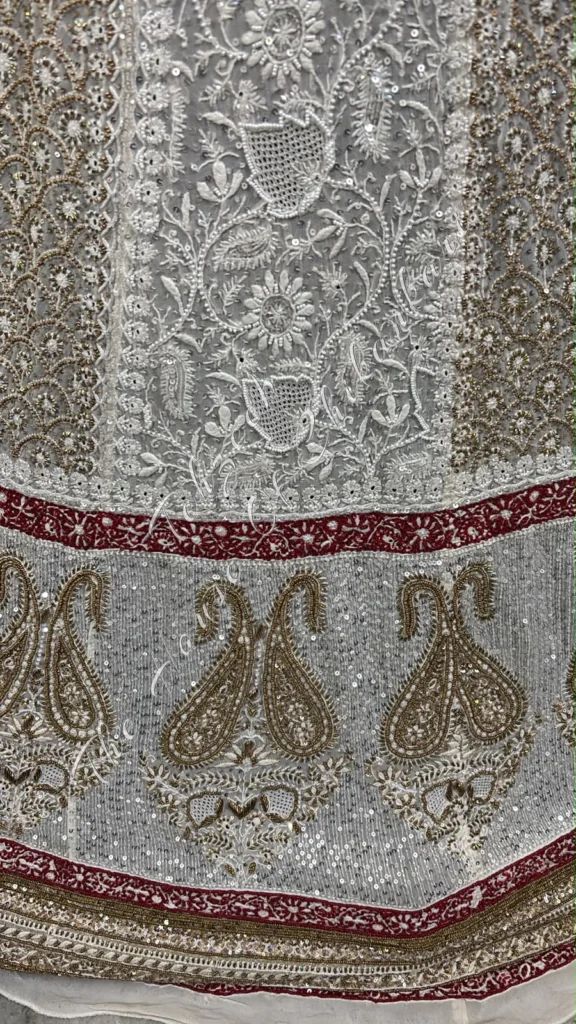
White on white is where chikankari began and still what it does best; an ivory or white chikankari bridal lehenga with tone-on-tone embroidery is the most traditional choice in Lucknow. Pastels, from blush to pistachio, keep the embroidery visible and photograph softly. Deep colours, red, wine and emerald, turn the embroidery into a texture rather than a pattern, which is lovely in silk and lost in net. A good rule: the darker the base, the finer the thread should be. Bring a swatch of the jewellery or the groom's outfit to the colour discussion; it settles more choices than any mood board.
What to pair a chikankari bridal lehenga with
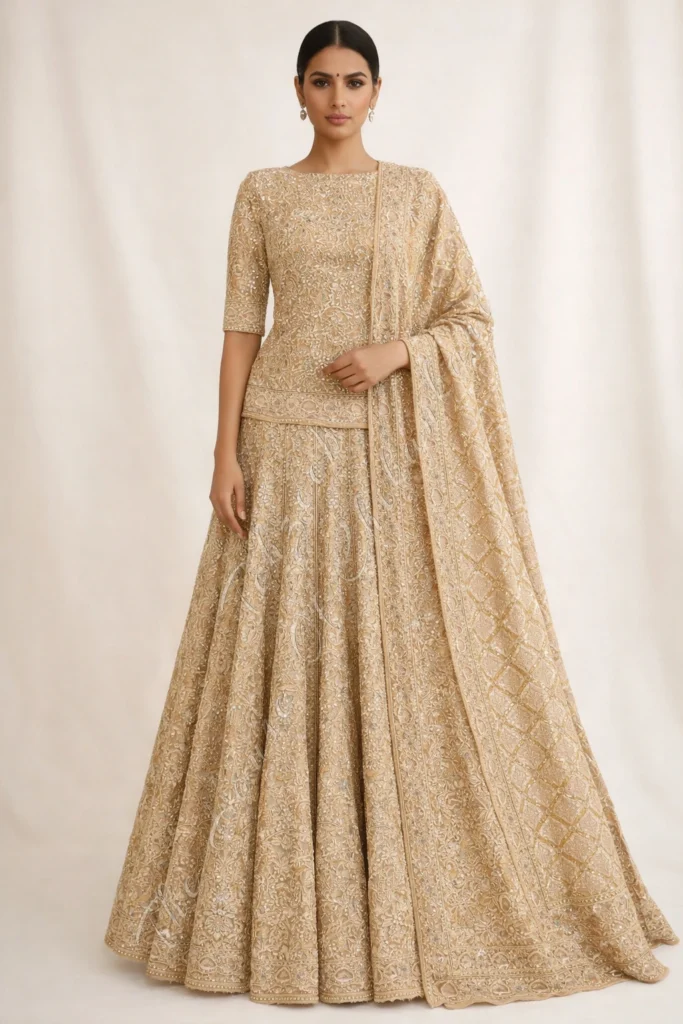
Chikankari leaves room. A heavily worked dupatta with a lighter lehenga, or the reverse, balances the ensemble; two heavy pieces fight. Mukaish (the small metal dots also called badla) and a line of zardosi at the hem add light without adding weight, and gold or silver tilla on the blouse ties the set to the jewellery. Ask for the blouse and dupatta to be embroidered in the same hand as the lehenga, so the motifs match.
Timelines, honestly
- Design and fabric: two to three weeks, including samples of the motif in the chosen thread.
- Embroidery: three to six months for an ek taar lehenga, depending on coverage. Haath jaali and chatta patti panels add to that.
- Finishing and fitting: four to six weeks, with one fitting in person or by measurements and video.
A made-to-order chikankari bridal lehenga therefore wants six to nine months. It can be done faster with a lighter design, but a fine one cannot be hurried; the thread does not allow it.
Ordering from the US, UK or Canada
Distance changes the process less than most brides in New Jersey, London or Toronto expect. Measurements are taken by video call or copied from a garment that already fits well, and the fitting before finishing happens on video, with adjustments made in Lucknow. Plan the shipping time and any import duties for your country into the timeline, and ask for the lehenga to arrive at least a month before the wedding, so there is time for a local tailor to make final tweaks.
Planning around a wedding abroad
Weddings in the US, the UK and Canada change two things. The weather: an autumn or winter wedding in New Jersey, London or Toronto suits silk or chanderi with a lined blouse and a dupatta heavy enough to keep, while georgette and organza suit summer and indoor venues. And travel: if the lehenga flies with you to a destination wedding, ask for it to be packed flat in a garment bag with tissue between the panels, and carry it on board rather than checking it. Order as if the wedding were a month earlier than it is.
After the wedding
A chikankari bridal lehenga is meant to outlive the day. Have it dry cleaned once, then store it flat or loosely rolled in muslin, never in plastic, with the heavy panels padded with tissue so the embroidery does not crease along the same line. Air it every few months. Lighter versions in the same hand suit the engagement, mehndi and sangeet. The dupatta and blouse can be worn again on their own, and many brides have the lehenga restyled for a sister or daughter years later.
Chikankari bridal lehengas at Tehzeeb
Tehzeeb's lehengas are all made this way, and the first thing we ask is the date, so that we can tell you plainly what is possible before it. Browse the chikankari lehenga collection, including Shan-e-Awadh Afreen, or share the date and your colour through the contact page and we will come back with a design and a timeline. For the rest of the wardrobe, read how to style chikankari for weddings and evenings.
Questions about chikankari bridal lehengas
Is chikankari suitable for a bridal lehenga?
Yes. Fine ek taar and haath jaali chikankari on georgette, organza or silk makes a light, detailed bridal lehenga, and mukaish or zardosi can be added for shine.
What colour is best for a chikankari bridal lehenga?
Ivory and white show the embroidery best and are the Lucknow tradition. Pastels keep it visible; red, wine and emerald work well in silk, where the embroidery reads as texture.
Can a chikankari lehenga be worn again after the wedding?
Yes, and it is one of its advantages. The blouse and dupatta work on their own with sarees and suits, and the lehenga itself suits family weddings and festive evenings, or can be restyled with a different blouse.
How long does a chikankari bridal lehenga take to make?
Six to nine months for a fully embroidered ek taar lehenga, including design, embroidery and fitting. Lighter designs can be finished sooner.